
Asphalt driveways and lots across Kent County
Asphalt Paving in Grand Rapids, MI
Driveways and parking areas built on a drained, compacted base, so they come through 138 freezing nights a year in one piece.
- Free on-site estimates
- Base depth and asphalt thickness written into every quote
- Permit questions sorted out before work is scheduled
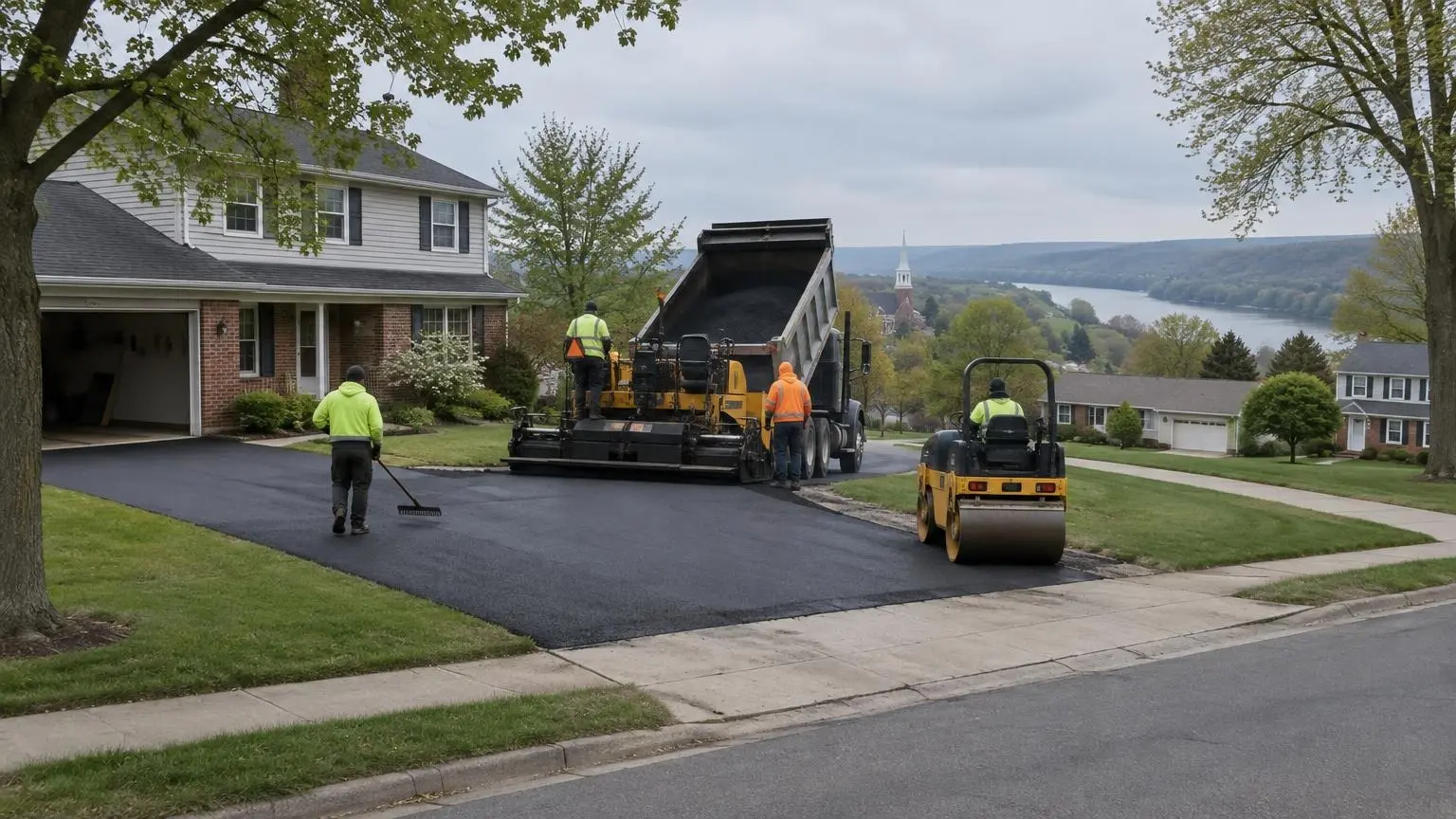
Asphalt That Has to Survive a West Michigan Winter
Asphalt paving in Grand Rapids is a winter problem that gets solved in summer. The city averages about 75 inches of snow a year, a lot of it lake-effect, and the temperature falls below freezing on roughly 138 nights. January's average high is 31 degrees and its average low is under 19, so meltwater freezes and thaws over and over in every crack and low spot. An asphalt driveway that drains well, sits on enough compacted gravel and gets its cracks sealed before November can handle that for decades. One that holds water will not.
Start with the base
The black surface is only a few inches thick. Cost guides describe a typical residential asphalt driveway as 2 to 3 inches of compacted hot mix over 6 to 8 inches of compacted gravel, with more of both for driveways that carry trucks, trailers or a boat. What lies under the gravel matters too. Grand Rapids sits in a flat, narrow stretch of the Grand River valley with steep hills and bluffs on either side, so ground conditions can change from one street to the next. When we find soft or saturated subgrade, we dig it out and replace it with compacted stone before any asphalt is ordered. That step adds cost, and it is the step that keeps a new driveway from cracking in its first spring.
Water, frost and the plow
Most of the damage we see on older Grand Rapids driveways has three causes:
- Water under the pavement. Downspouts that empty onto the drive, low spots that pond, and edges that let water into the base.
- Frost. Water in the base freezes, expands and lifts the asphalt, then leaves a void when it thaws. That is how potholes start.
- Snow removal. Plow blades and snowblowers chip unsupported edges, and salt brine soaks into open cracks all winter.
A new driveway should be pitched so water leaves it, with edges backed by soil and grass so they do not hang in the air. On existing driveways, filling cracks every fall and sealcoating every few years slows all three.
When to pave
Hot asphalt has to be compacted while it is still workable, and cold ground pulls heat out of it fast. Grand Rapids' average last spring frost is around May 1 and the first fall frost comes around October 11, so new driveways and overlays are best placed from late spring through early fall. Sealcoating needs dry weather between about 50 and 95 degrees and a day or more to cure, so it fits the warmer months as well. Crack sealing and small hot-mix patches can run later into the fall when the weather cooperates. In winter we can look at a job, measure it and give you a quote so it is on the schedule early.
Approaches, sidewalks and permits
In Grand Rapids, the driveway approach between the sidewalk and the street is in the public right-of-way. The city requires a Sidewalk/Drive Approach Permit to build, rebuild, remove or repair it, and only a holder of the city's Sidewalk Builder's License can pull that permit. The permit fee is $75 for a one- or two-unit home with less than 200 square feet of concrete work and $175 above that, and the permit is good for 60 days. A brand-new driveway or curb cut may need additional review. Your driveway on private property is a separate matter, but where the two meet, we plan the joint so the asphalt meets the approach cleanly, and we tell you at the estimate whether your project reaches the right-of-way at all.
Outside the city, rules depend on who owns the road. The Kent County Road Commission requires a permit for any work in a county road right-of-way, including residential driveways, and the Ottawa County Road Commission requires one to construct, reconstruct, surface or resurface a driveway onto its roads. Cities such as Wyoming, Walker and East Grand Rapids have their own right-of-way permits. We check which applies to your address.
Repair, overlay or replace?
Not every tired driveway needs to be torn out. HomeGuide's repair guide suggests repairing or resurfacing when less than about a quarter of the surface is damaged, the asphalt is under 15 to 20 years old and the base is still stable. Replacement makes more sense when cracking covers most of the surface, potholes keep coming back, the driveway is 20 to 30 years old, or water problems never go away. At the estimate we tell you which camp your driveway is in and why, and if a cheaper fix will do the job, we say so.
Where We Work
We work in Grand Rapids and across the Kent County suburbs and townships: Wyoming, Kentwood, Walker, Grandville, East Grand Rapids, Rockford, Lowell, Cascade, Ada, Plainfield, Alpine, Gaines, Byron Center, Caledonia and the communities north to Cedar Springs and Sparta. We also cover the Ottawa County side, including Jenison, Hudsonville, Allendale, Coopersville and Holland.
What changes from place to place is mostly who controls the road in front of you. Inside Grand Rapids, approach work needs a city permit pulled by a licensed sidewalk builder. In the townships, the Kent or Ottawa County Road Commission covers driveways that meet county roads. Lakeside and riverside properties can trigger soil erosion rules. Each town page below covers what we found for that community.
- Asphalt Paving in Grand Rapids, MI
- Asphalt Paving in Wyoming, MI
- Asphalt Paving in Kentwood, MI
- Asphalt Paving in Walker, MI
- Asphalt Paving in Grandville, MI
- Asphalt Paving in East Grand Rapids, MI
- Asphalt Paving in Rockford, MI
- Asphalt Paving in Cedar Springs, MI
- Asphalt Paving in Lowell, MI
- Asphalt Paving in Sparta, MI
- Asphalt Paving in Comstock Park, MI
- Asphalt Paving in Plainfield Township, MI
- Asphalt Paving in Alpine Township, MI
- Asphalt Paving in Ada Township, MI
- Asphalt Paving in Cascade Township, MI
- Asphalt Paving in Byron Center, MI
- Asphalt Paving in Caledonia, MI
- Asphalt Paving in Gaines Township, MI
- Asphalt Paving in Hudsonville, MI
- Asphalt Paving in Jenison, MI
- Asphalt Paving in Allendale, MI
- Asphalt Paving in Holland, MI
- Asphalt Paving in Coopersville, MI
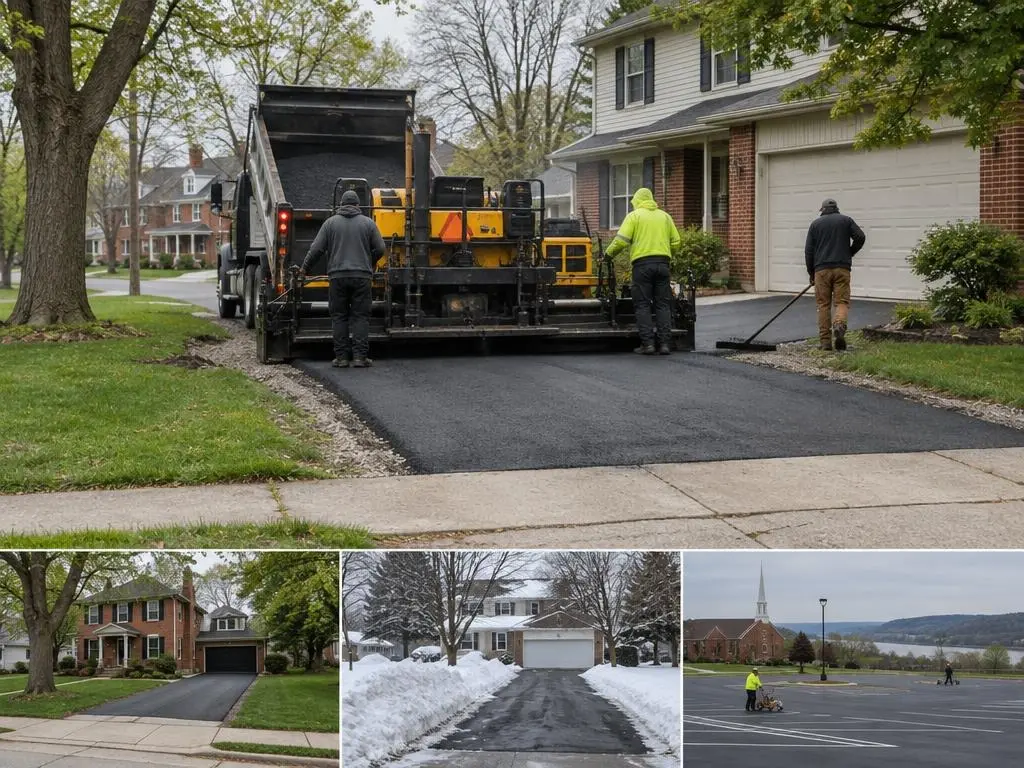
Common Questions
What is the best material for a driveway in Michigan?
Asphalt and concrete both work here. Asphalt costs less up front, flexes a little with frost movement, is easy to patch and does not scale from road salt the way concrete can, but it needs sealing every few years. Concrete costs more and lasts longer with less upkeep. Most homeowners choose by budget, how long they plan to stay and what the neighborhood already has.
How much does asphalt paving cost in Grand Rapids?
National cost guides put a new asphalt driveway at about $5 to $12 or more per square foot (HomeGuide) and $7 to $15 per square foot (Angi). HomeGuide lists a 400-square-foot driveway at $2,000 to $4,800 and notes that some contractors set minimums around $2,000. Tear-out, soft-soil repair and access move the number, and your written estimate is the price.
What is asphalt paving, exactly?
Asphalt pavement is crushed stone and sand bound with liquid asphalt cement, mixed hot at a plant, trucked to the site, spread and rolled while it is still hot. For a driveway it goes over a compacted gravel base. Once it cools it can carry traffic, and it reaches full hardness over the following months.
Is there a cheap way to fix an asphalt driveway?
Often yes. Sealing cracks runs about $0.50 to $3 per linear foot and a pothole repair about $100 to $400 in HomeGuide's figures, far less than replacement. If the base is sound and damage is limited, repairs plus sealcoating can add years. If the base has failed, patches tend to keep failing and replacement is the better spend.
How long does a new asphalt driveway last here?
Cost guides give asphalt driveways 15 to 30 years. In a lake-effect climate the low end comes from poor drainage and skipped maintenance; the high end comes from a good base, a drained surface, crack sealing every fall and sealcoating every few years.
When can I drive on new asphalt?
Usually after a few days for cars, longer in hot weather and for heavy trucks or trailers. New asphalt stays soft through its first summer, so avoid turning wheels while parked and put a board under kickstands and trailer jacks. We give you timing for your job when we finish.
Asphalt Paving and Maintenance Services
Six services that cover an asphalt surface from the day it is placed through the years of upkeep that decide how long it lasts.
Asphalt Driveway Paving
New and replacement asphalt driveways built on a compacted gravel base and pitched to shed meltwater.
Learn more →Driveway Resurfacing & Overlays
A new layer of hot asphalt over a driveway whose base is still sound, for less than a full replacement.
Learn more →Sealcoating
A protective coat that slows oxidation, salt damage and water entry on driveways and lots.
Learn more →Asphalt Repair & Pothole Patching
Cut-out patches, pothole repair, edge rebuilding and fixes for sunken or heaved spots.
Learn more →Crack Sealing
Hot-pour sealant in routed cracks to keep meltwater and salt brine out of the base before winter.
Learn more →Parking Lot Paving & Striping
Paving, overlays, patching and line striping for church, office, retail and apartment lots.
Learn more →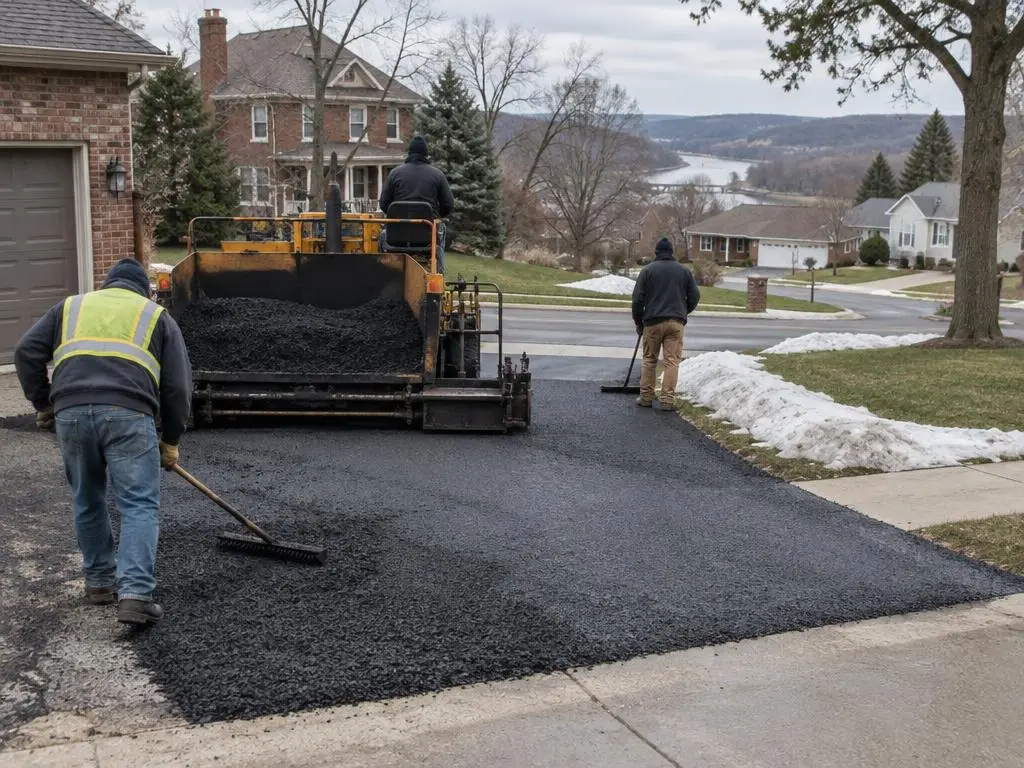
Why Homeowners Call Asphalt Paving Grand Rapids
Base before blacktop
Soft subgrade is dug out and replaced with compacted stone before new asphalt goes down.
Numbers in the quote
Gravel depth and compacted asphalt thickness are written for each area, so bids compare fairly.
Straight answers on repair
If sealing or patching will carry your driveway a few more years, we tell you that instead of selling a replacement.
Right-of-way checked
We confirm whether the city or county road commission controls your approach and what permit applies.
Get an Asphalt Paving Estimate
Free on-site estimates in Grand Rapids and nearby Kent and Ottawa County communities.